

Bitcoin is not going to die at the hands of a government.
Not China. Not the SEC. Not some quantum computer in a lab in 2031.
If Bitcoin cracks this summer, we crack it. From the inside. Over JPEGs.
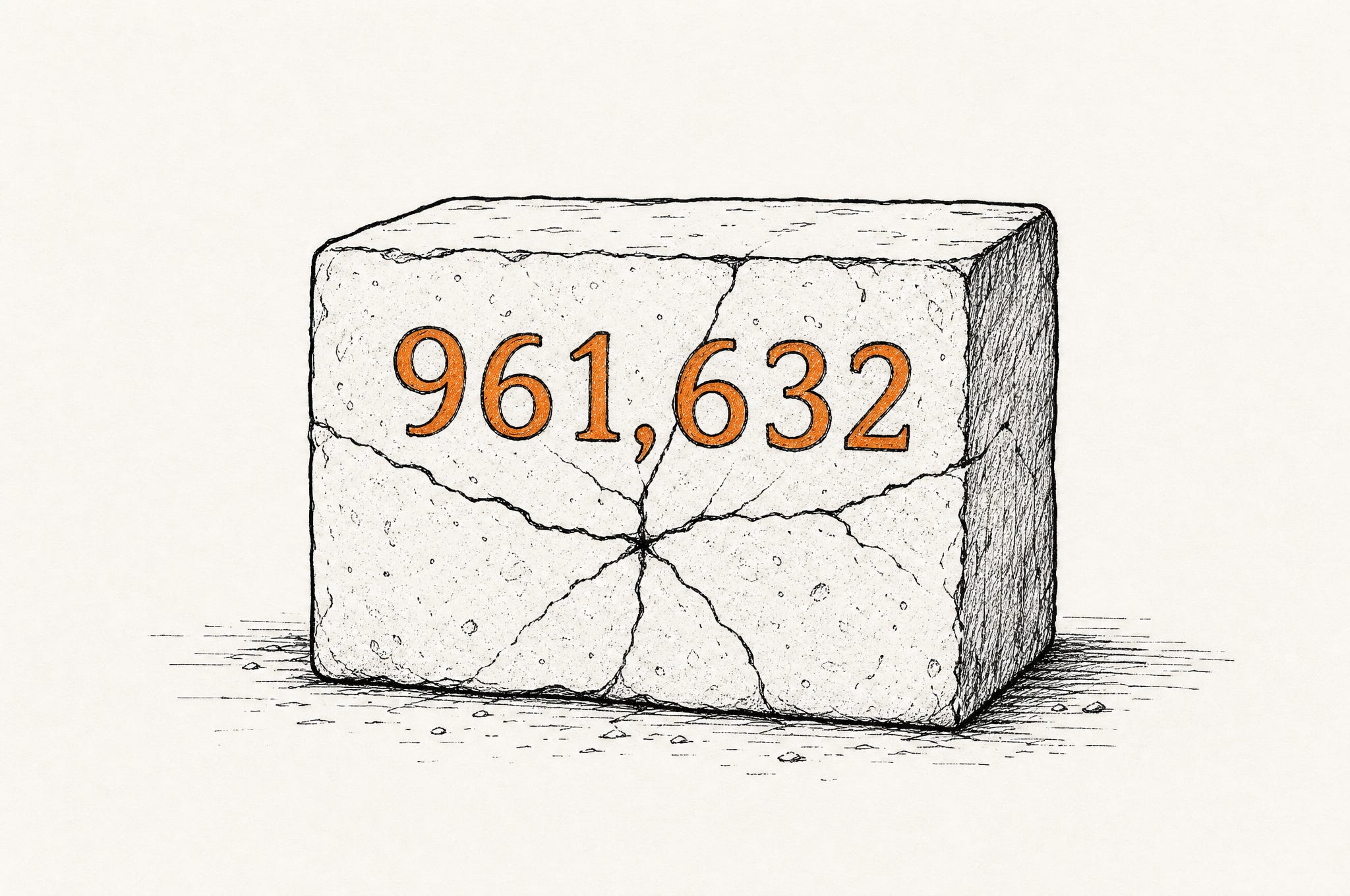
In about two weeks the chain hits block 961,632. Write that number down. Depending on who you drink with, that block is either the day node runners take their network back, or the day a very small, very loud crowd talks itself into a chain split.
The proposal is BIP 110. Reduced Data Temporary Softfork. It went Complete in the BIPs repo on June 25. Bitcoin Twitter has been a knife fight ever since.
Michael Saylor came out of hiding for this one. He called it iatrogenic. That is the medical word for harm caused by the treatment, not the disease. He chose that word on purpose. Read it twice.
How we got into this mess
For over ten years, OP_RETURN, the little note field stapled to a Bitcoin transaction, was capped at 83 bytes.
Then Bitcoin Core v30 shipped and raised it to 100,000.
Six months ago nobody outside dev circles knew what an OP_RETURN was. Half of us thought op meant your enemies. Now it is the only thing anyone talks about, because node runners finally looked at what they have been asked to carry. Images. Tokens. Files. Monkey JPEGs.
None of that is money. All of it is forever. And your node pays the rent on it, every month, for the rest of its life.
So answer this before you pick a team. Is Bitcoin money that happens to be programmable, or a data layer that happens to move money?
Answer it honestly. Then keep reading.
What BIP 110 actually does
Not vibes. Rules.
New output scripts over 34 bytes are invalid. Unless the first opcode is OP_RETURN, in which case 83 bytes is your ceiling. Data pushes and witness items over 256 bytes are invalid.
Coins you already hold are grandfathered. Permanently. Nobody’s sats get locked. The inscriptions already on chain stay exactly where they are, ugly and untouched.
And the thing kills itself after 52,416 blocks. About a year. No second vote required.
That is the pitch. A temporary cleanup with an expiry date built in.
The case for is old, and it is simple
Nodes make the rules. Miners make blocks. A block your node rejects is not a block.
That is not theory. That was BIP 148 in 2017, when an intolerant minority forced SegWit past miners, past exchanges, past half of Core. It worked.
Supporters ran BIP 110’s rules against roughly five million mainnet transactions. Around 40 percent of non monetary activity got filtered. Legitimate payments blocked: zero. Lightning, CoinJoin, multisig, all came through clean.
Their best line is the one that lands hardest. Your node is not a Dropbox for other people’s memes. Every megabyte of junk is a bill you are quietly handing to the kid who wants to sync a full node in 2035.
The case against is harder to wave off than they admit
Samson Mow’s objection is not technical, and that is exactly why it stings. BIP 110 does not have consensus. Consensus is the entire product.
SegWit had agreement on the change and a brawl over the mechanics. This is a brawl over the change itself, and a lot of the loudest opponents are the people who actually maintain the software.
Jason Hughes is a lead dev at Ocean. That is Luke’s own shop. He put his name on a public dissent and put activation odds at 5 to 15 percent. His point is blunt. Spam is a JP Morgan problem. As long as the profit beats the fine, the fine is just a line item. You cannot patch human greed with a soft fork.
Adam Back has warned about funds getting frozen. Saylor is saying the same thing in fewer syllables. The cure may cost more than the disease.
Now the number nobody wants to say out loud
Miner signaling for BIP 110 is sitting near one percent.
One. The early lock in threshold is 55.
But BIP 110 was built so that number cannot save you. At block 961,632, roughly early August, mandatory signaling begins and enforcing nodes start rejecting any block that does not signal bit 4. Lock in projects to block 963,648. Activation near block 965,664, around September 1.
The UASF asks the question whether the miners feel like answering or not.
The wildcard is Foundry. Roughly a third of network hashrate. They are polling their own miners right now, hashrate weighted, no response counts as No, holding at No until Yes clears 51 percent.
Their voting window closes at block 961,632. Of course it does.
Where I land
Uneasy. Both camps.
We have done this before. The block size wars felt like the end of the world. Bitcoin walked out of it harder. Bitcoin Cash walked out of it and showed us exactly what it was worth.
But here is the thing that keeps bothering me. While we are at war over dick pics on the blockchain, the fiat guys are quietly laying stablecoin rails across the entire planet. That is the bigger threat to Bitcoin as money. And nobody is fighting it, because fighting it does not get you quote tweets.
Some pigs love the mud more than you want to get dirty. Pick your fights.
Block 961,632. Two weeks.
Now tell me where you stand. Core, Knots, or still reading.
The deeper battle is not only about block space. It is about the architecture of trust itself: who has the power to change the rules of a system designed to remove the need for trusted intermediaries?